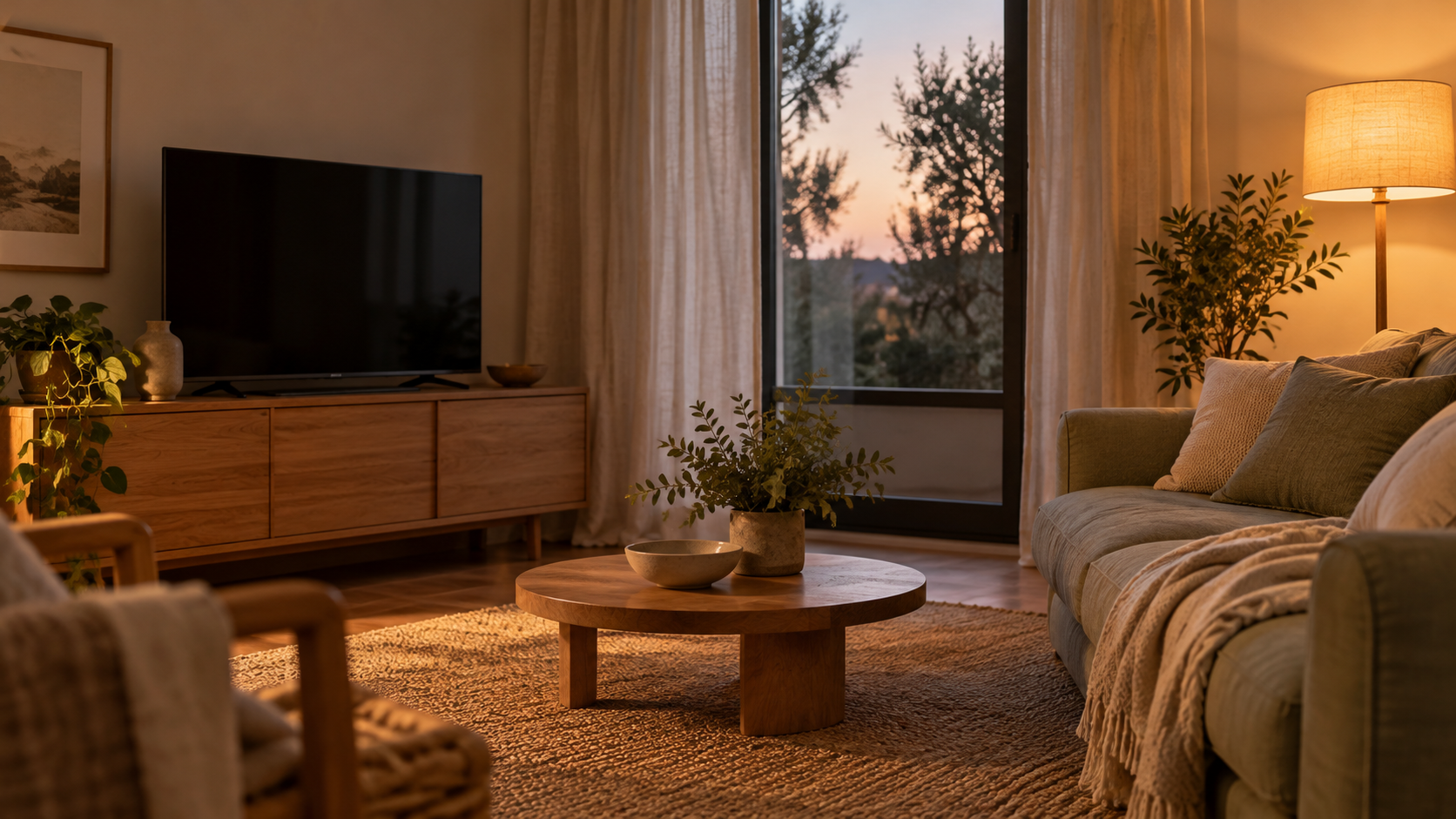
You sit down at last. The television is on, a video is playing on your phone, and someone in the next room is listening to something else. Nothing is especially loud. Yet you feel less settled than you expected.
You may not need a more impressive evening routine. You may simply want fewer sounds accompanying the first quiet moment you have had all day.
If background noise makes it hard to unwind, you can begin with one small change in the room. No perfect silence, daily tracking, or complete household makeover is required.
Notice what you are actually listening to
Background sound can become so familiar that you stop choosing it. The television stays on after the program ends. A podcast follows you from the commute into the kitchen. A short video becomes the next short video.
Some sounds are useful or enjoyable. The question is whether you still want this particular sound, in this particular moment. Something that felt pleasant while cooking may feel intrusive when you sit down to read.
Take one ordinary evening and notice the sound sources around you: speech, music, alerts, appliances, traffic. You do not need to record them. Just ask, “Which of these am I choosing, and which is still here because I have not turned it off?”
Try removing one layer
Before adding a relaxation playlist, try removing one source of sound you no longer want. Turn off the unwatched television. Pause the video while you eat. Stop the podcast when you arrive home, rather than carrying it into the next activity automatically.
You can keep the music you enjoy. You can watch the program you chose. This is an invitation to make the sound intentional, rather than allowing several sources to continue together.
For example, a quiet song may suit the evening better than a song, a television conversation, and intermittent phone audio playing at once. Or you may prefer no added sound for a few minutes. Both are reasonable choices.
Try the change for one short pause. If it makes no useful difference, leave it there. You have gathered enough information without creating another habit to maintain.
A quieter evening does not require silence
Silence is not comfortable for everyone, and a silent home is not available to everyone. You may enjoy familiar music, the sound of a fan, or a low-volume program you have deliberately chosen.
What feels comfortable can change from one evening to another. A sound you welcome on Saturday might be too much after a demanding Wednesday. You do not need a permanent rule to justify changing it.
If turning everything off leaves you uncomfortable, choose one sound you actually like and keep it at a comfortable volume. Notice whether that arrangement suits you better. There is no correct soundtrack for resting.
When you share the space
Other people may want a different evening. Someone is watching a show, a child is playing, or a housemate is speaking on the phone. Their activities do not disappear because you need a quieter corner.
Start with what is practical: sit farther from the speaker, close an interior door if appropriate, or use another room for a brief pause. If everyone agrees, one person can use headphones while another keeps the shared room quieter.
A small request can also be enough: “Could we turn the television down while I finish reading?” You are discussing the room, not asking everyone to adopt your preferences.
If you use headphones or earplugs, keep necessary alerts and responsibilities in mind. Choose an arrangement that lets you hear what you need to hear. Quieter should also be workable and safe.
Let one activity have your attention
You can try drinking your tea without a second screen, washing a few dishes without spoken audio, or reading two pages without a program running beside you. A single activity may feel more comfortable than an evening with several things competing to accompany it.
If the phone keeps filling every pause, this guide to changing automatic phone checking without a digital detox offers a separate place to begin. You do not have to tackle both habits today.
And if the unfinished list is what keeps you working, read how to rest when your to-do list is still full. A quieter room and permission to stop address different parts of the evening.
Make a little more room in your day
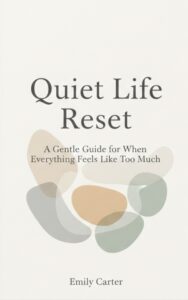
Quiet Life Reset by Emily Carter explores ways to reduce everyday pressure and create small pockets of quiet within the life you already have. If this article feels familiar, the guide offers a gentle next step.
Choose comfort, not a new standard
You do not need to become someone who lives in perfect quiet. You only need permission to change the sound around you when it stops feeling welcome.
Tonight, choose one sound to pause. See whether you prefer the room that way. You can make a different choice tomorrow.
This article offers general educational information, not a diagnosis or treatment. If sensitivity to sound is new, sudden, painful, worsening, or interfering with everyday life, speak with a qualified healthcare professional rather than relying on changes at home alone.